
Terry Oas
Emeritus Professor of Biochemistry & Cell Biology, Duke University School of Medicine.
Four decades at the intersection of computational theory and experiment — deriving the models and running the spectroscopy that tests them.
Curriculum Vitæ (PDF) ↓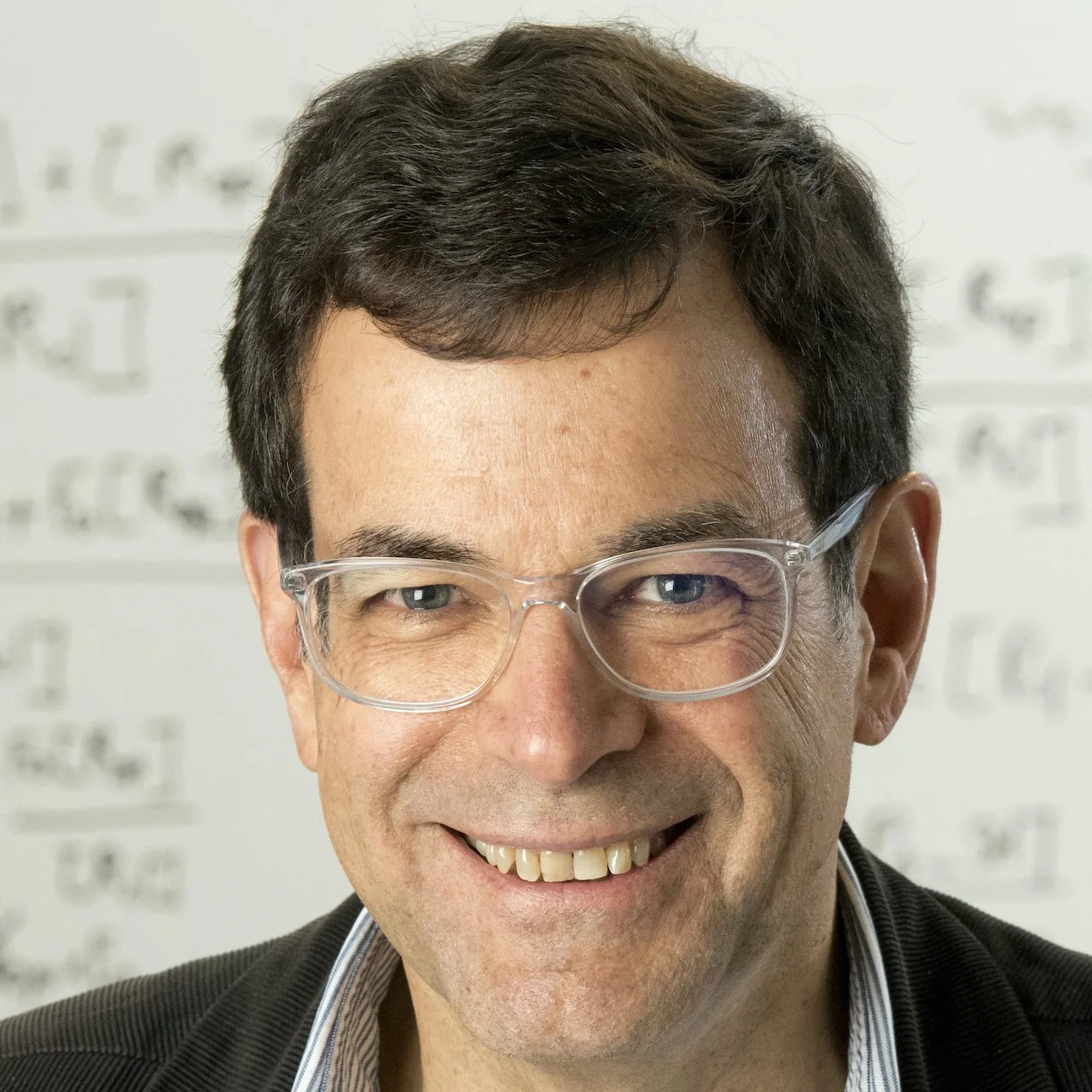
MODEL–EXPERIMENT
INTERFACE
Terry Oas is Emeritus Professor of Biochemistry and Cell Biology at the Duke University School of Medicine. He ran a research lab at Duke from 1990 to 2026, teaching Biophysical Methods, Principles of Protein–Protein Association, and Understanding NMR to PhD students; Protein Folding and Misfolding to MD students; and Physical Chemistry and Biochemistry to undergraduates.
His research focuses on protein folding and conformational change, using a range of spectroscopic and structural methods. His group was the first to discover a protein that folds in less than a millisecond, and the first to measure the thermodynamic stability of a protein in a living cell. He is a recognized expert in models of allostery and conformational selection / induced fit. He resides in Durham, North Carolina, and remains active on Duke's campus — advising students and collaborating with colleagues.
Over more than four decades, his research demanded fluency in both domains at once — deriving the models, and running the experiments that challenge them. That dual perspective is uncommon.
He can evaluate a computational prediction in the framework it was generated, identify the experiment most likely to confirm or refute it, and translate the results back to the computational team in terms they recognize — without either side losing something in translation. That makes him an effective partner for computational biology groups that need experimental ground truth, and for experimental teams seeking the mechanistic depth that rigorous theory provides.
Seminal Work
Submillisecond folding of monomeric λ repressor
Quantitative protein stability measurement in vivo
Conformational selection or induced fit: a flux description of reaction mechanism
Want this perspective on your project?
Tell us about the protein, the data, and the question. We'll tell you whether a thermodynamic model can answer it — and how.
Contact Us→