
Protein thermodynamics your modeling and bench teams can both act on.
Four decades at the intersection of computational theory and experiment. We translate predictions into the experiments that test them — and return rigorous, mechanistic results your modeling team can use.
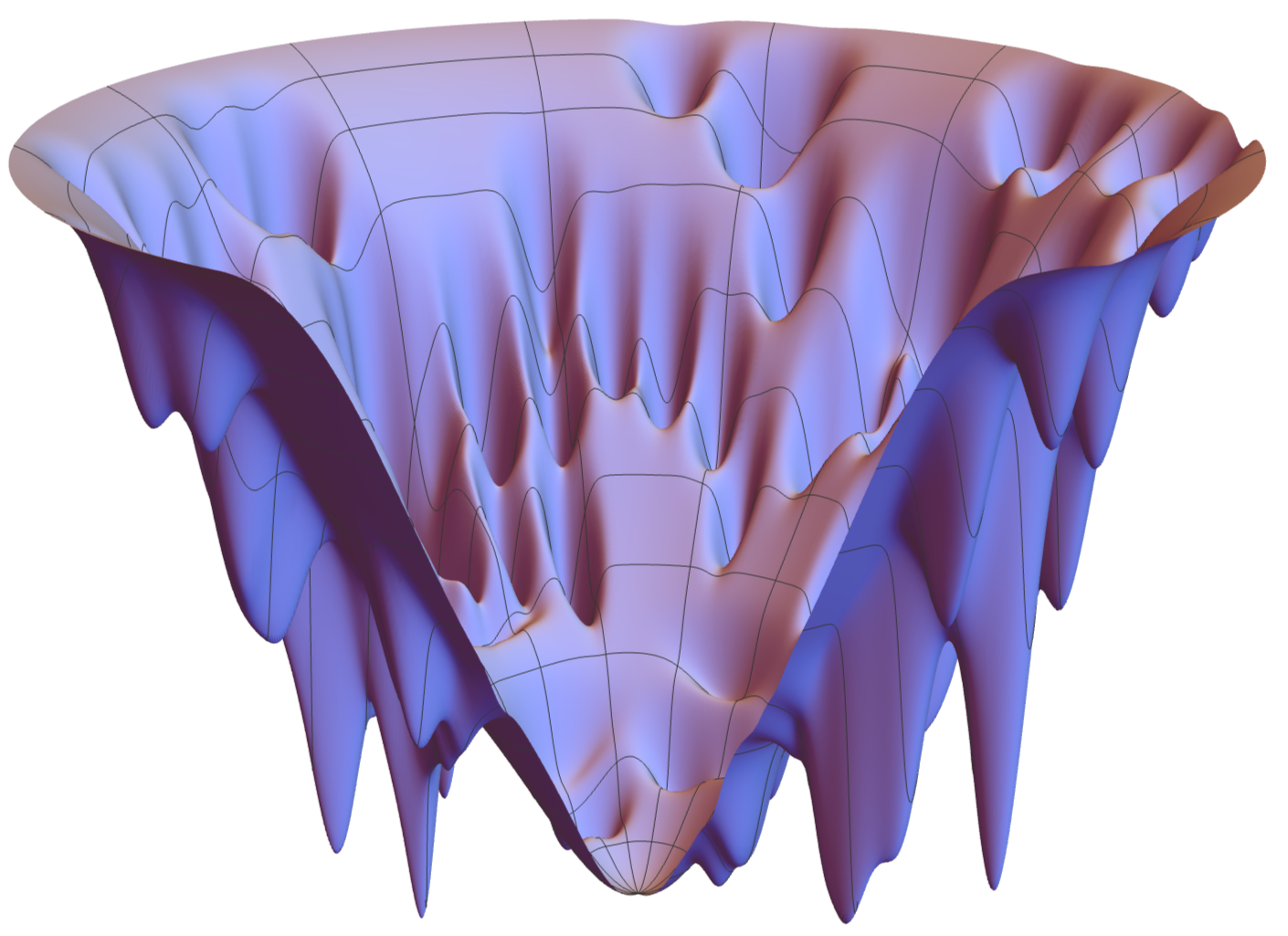
A model is only as good as the experiment that tests it.
Understand your system
We start from your data, your hypotheses, and the biological or therapeutic question — not just the experiment you've already run.
Build the right model
We construct a thermodynamically rigorous model — multi-state, coupled, or allosteric — and fit it globally across the full dataset.
Deliver actionable results
You get reliable parameters, a mechanistic interpretation, and clear guidance on what to do next — results that survive review.
Fluent in both languages
Most consultants speak either computation or experiment. ThermoPrōt speaks both — and translates between them.
- —Energy landscape theory
- —Kinetic network modeling
- —Global thermodynamic fitting
- —Conformational selection & induced fit
- —Statistical-mechanical partition functions
- —Flux analysis across reaction pathways
- —Isothermal Titration Calorimetry (ITC)
- —Stopped-flow kinetics
- —Circular Dichroism (CD)
- —Solution NMR spectroscopy
- —SPR & Bio-Layer Interferometry
- —Mass Photometry & MST
Case studies
Conformational change coupled to ligand binding
A 10-state kinetic model of coupled folding and ligand binding that resolves conformational selection from induced fit — showing both operate together near the apparent Kd.
Antibody-binding domains fold independently
Fluorescence-monitored urea unfolding of all five domains, alone and in full-length SpA-N, reveals a steep N-to-C stability gradient — with a possible role in secretion.
Exposing hidden high-affinity states
Bayesian NMR analysis of a 6-state model shows TAR's highest-affinity state is present all along — hidden behind its low population.
I can say without reservation that Terry is among the most rigorous quantitative scientists I have encountered in a long career working at the intersection of chemistry and biology. That kind of mechanistic clarity requires someone who thinks in the language of thermodynamics and kinetics as naturally as most scientists think in English. Terry is that person.
Have a system worth modeling?
Tell us about the protein, the data, and the question. We'll tell you whether a thermodynamic model can answer it — and how.
Contact Us →